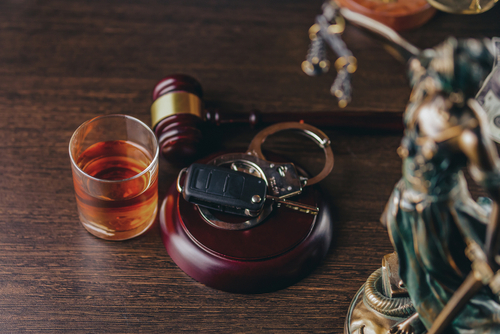
A first DUI in Florida typically involves two separate cases at once. The criminal case in court decides whether you’re guilty and what penalties apply, which for a first offense can include fines of $500 to $1,000, up to six months in jail, probation, community service, DUI school, and vehicle impoundment..
At Morris Law Firm, P.A., our St. Petersburg DUI attorneys help first-time defendants throughout Pinellas County understand both processes and respond before critical deadlines pass. Managing partner Melinda Morris is a former prosecutor who handled DUI cases for the State. Contact Morris Law Firm at (727) 388-4736 for a free consultation.
What the State Must Prove for a Florida DUI
Under Florida Statutes § 316.193, the State must prove you were driving or in actual physical control of a vehicle. Actual physical control can apply even if the vehicle wasn’t moving, such as when someone is in the driver’s seat with access to the keys. The State must also prove one of two theories: that you were under the influence of alcohol or certain drugs to the extent your normal faculties were impaired, or that you had a blood or breath alcohol level of 0.08 or higher.
A BAC Result Is Evidence, Not the Whole Case
A breath test or blood result is important evidence, but it isn’t automatically conclusive. Defense attorneys examine whether the officer observed you for the required period before a breath test, whether testing procedures were followed, whether the breath machine was properly maintained, and whether the timing of the test accurately reflects your alcohol level while driving. Problems in any of these areas can affect whether the result is admissible or how much weight it carries.
First-Offense DUI Penalties in Florida
For a standard first DUI conviction, Florida law sets a fine of $500 to $1,000 and up to six months in jail. If your blood or breath alcohol level was 0.15 or higher, or a minor was in the vehicle, the fine increases to $1,000 to $2,000 and the maximum jail term increases to nine months.
Every first conviction also carries several required conditions:
- Probation: Up to one year of monthly reporting probation, with total probation and jail not exceeding one year.
- Community service: At least 50 hours of public service or community work.
- DUI school: Completion of a licensed substance abuse course and psychosocial evaluation, plus any treatment the program recommends.
- Vehicle impoundment: Impoundment or immobilization of a vehicle for 10 days, which a court can dismiss in limited circumstances, such as when the family has no other transportation.
A first DUI that causes property damage or injury is charged more seriously. Our page on first DUI punishments and our broader overview of DUI punishments cover these consequences in more detail.
Driver’s License Suspension After a DUI Arrest
The administrative suspension is separate from the court case and starts with the arrest itself. If you blew 0.08 or higher, or refused a breath, blood, or urine test, the officer can take your license and issue a notice of suspension. That notice serves as a 10-day temporary permit if you’re otherwise eligible to drive. A first suspension for an unlawful alcohol level lasts six months.
You have only 10 days from the date of the notice to request a formal or informal review of the suspension through FLHSMV, or to apply for a restricted license. FLHSMV rulings can’t be used in your criminal trial, so the two processes stay separate. Our page on the DMV administrative review hearing explains what happens at that hearing.
Refusal Cases Have Different License Issues
Florida’s implied consent law means drivers agree to lawful breath, blood, or urine testing after a DUI arrest. A first refusal leads to a one-year administrative suspension, and a refusal after a prior refusal suspension carries an 18-month suspension and can be charged as a separate misdemeanor. Refusal cases raise their own defense issues, which our DUI refusal defense page explains.
Ignition Interlock and Restricted Driving
For a first conviction, a court may order an ignition interlock device for at least six months if your alcohol level was 0.08 or higher. If your level was 0.15 or higher, or a minor was in the vehicle, the court must order the device for at least six months. Our page on the ignition interlock device explains how these requirements work.
Restricted driving may also be available. Some first-time drivers can request a business-purpose restricted license within the 10-day window, though accepting it waives administrative review of the suspension, not your right to fight the criminal charge. Others may become eligible for a hardship license after a waiting period, usually with enrollment in DUI school. Eligibility depends on your record and the type of suspension, so it should be reviewed early.
Common Defense Issues in a First DUI Case
Every case depends on its facts, but common defense issues include:
- The traffic stop: Officers need a lawful basis to stop your vehicle, and evidence from an unlawful stop may be suppressed.
- Probable cause for arrest: The officer’s observations must support the arrest.
- Field sobriety exercises: These tests must be properly instructed and scored, and conditions like footwear, weather, or medical issues can affect performance.
- Breath, blood, or urine evidence: Testing must follow required procedures, and equipment must be properly maintained.
- Actual physical control: Whether you were actually driving or in control of the vehicle may be disputed.
- Medical issues: Conditions such as diabetes or acid reflux can affect breath results or mimic signs of impairment.
When evidence problems exist, it may be possible to negotiate a reduced charge, such as a reckless driving reduction, or to seek dismissal.
Video and Body-Camera Evidence Can Change the Analysis
Dashcam, body camera, and booking video can show how you drove, spoke, and performed field sobriety exercises. Video sometimes contradicts the officer’s written report, and it can reveal problems with how tests were explained or administered. Obtaining and reviewing the complete record, not just the arrest report, is essential.
What to Do in the First Days After Arrest
The first days after a DUI arrest matter:
- Track your deadlines: Note the 10-day deadline to request administrative review and your first court date.
- Preserve your paperwork: Keep your citation, notice of suspension, and release documents.
- Write down what happened: Record details about the stop, tests, and your interactions with officers while your memory is fresh.
- Avoid discussing the facts online: Don’t post about your arrest or discuss details with anyone but your attorney.
- Arrange transportation: Plan how you’ll get to work and appointments if your license is suspended.
- Contact Morris Law Firm: Call (727) 388-4736 so we can review your case before deadlines pass.
Talk With Morris Law Firm About a St. Petersburg DUI
Melinda Morris, the managing partner of Morris Law Firm, P.A., is a former Assistant State Attorney with the Sixth Judicial Circuit, where she served on the DUI Manslaughter and Vehicular Homicide squad and received specialized DUI prosecution training. With more than 20 years of experience, she knows how prosecutors build DUI cases and where those cases are vulnerable. She and attorney Seth Shapiro work one-on-one with every client, and you’ll have your attorney’s cell phone number for direct communication.
We offer same-day representation, so we can begin protecting your license and building your defense right away. Our results include DUI charges reduced to reckless driving, though every case is different and no outcome can be guaranteed.
You can also request our free DUI guide for more information about the process.
Contact Morris Law Firm at (727) 388-4736 to discuss your case.
Frequently Asked Questions
Will I go to jail for a first DUI in Florida?
Florida law allows up to six months in jail for a standard first DUI, or up to nine months if your alcohol level was 0.15 or higher or a minor was in the vehicle. There’s no mandatory minimum jail term for a standard first offense, and the actual sentence depends on the facts, the evidence, and how the case is resolved.
Can I challenge my license suspension separately from the DUI case?
Yes. The administrative suspension is handled by FLHSMV, separate from the criminal court case. You generally have 10 days from the date of the notice to request a formal or informal review, and the outcome doesn’t decide the criminal case.
Can a first DUI charge be reduced?
Sometimes. Depending on the evidence and any weaknesses in the State’s case, it may be possible to negotiate a reduction, such as to reckless driving, or to seek dismissal. The outcome depends on the facts and Florida law, so no result can be promised.